Charcuterie Board Ideas: The Quick Answer
A great charcuterie board balances three things: variety (2-3 cheeses, 2-3 cured meats, a mix of textures), color (fresh fruit, herbs, or edible flowers), and height (using risers, boards, or stacked bowls to avoid a flat, one-note spread). From there, a season or an occasion gives the whole thing a theme, and fall is the easiest one to build for. Everything below is how we build boards for weddings, showers, and corporate events around Denver and the Front Range.
Building Blocks of a Great Board
Every board, no matter the theme, starts with the same core categories:
- Cheese: aim for a mix of soft (brie, goat cheese), firm (cheddar, gouda), and something with bite (blue cheese, aged manchego)
- Cured meat: prosciutto, salami, and soppressata cover most tastes without repeating flavor profiles
- Something crunchy: crackers, crostini, breadsticks, or toasted nuts
- Something fresh: grapes, berries, sliced pear or apple, fresh herbs
- Something sweet: honey, fig jam, or a fruit preserve to cut the richness of the cheese and meat
- Something briny: olives or pickles for contrast
Once those categories are covered, the board almost styles itself. The mistakes usually come from skipping a category, not from choosing the "wrong" items within one.
Flavor Pairings That Always Work
Some combinations do more work than others because the flavors actively play off each other rather than just sitting next to each other on the board.
| Pairing | Why It Works |
|---|---|
| Brie + honey + toasted walnuts | Creamy, sweet, and crunchy in one bite |
| Prosciutto + melon or peach | Salty meat against juicy, sweet fruit |
| Blue cheese + fig jam | Sharp cheese softened by dark, sweet fruit |
| Manchego + membrillo (quince paste) | Classic Spanish pairing, nutty and sweet |
| Soppressata + pickled vegetables | Spice and acid balance the fat |
| Goat cheese + local honey + thyme | Tangy and floral, and it looks as good as it tastes |
Charcuterie Board Ideas That Use Colorado's Seasons
One of the advantages of building boards in Colorado is that the produce calendar gives you a built-in theme four times a year, and guests notice when something on the board actually came from down the road.
Fall and harvest boards
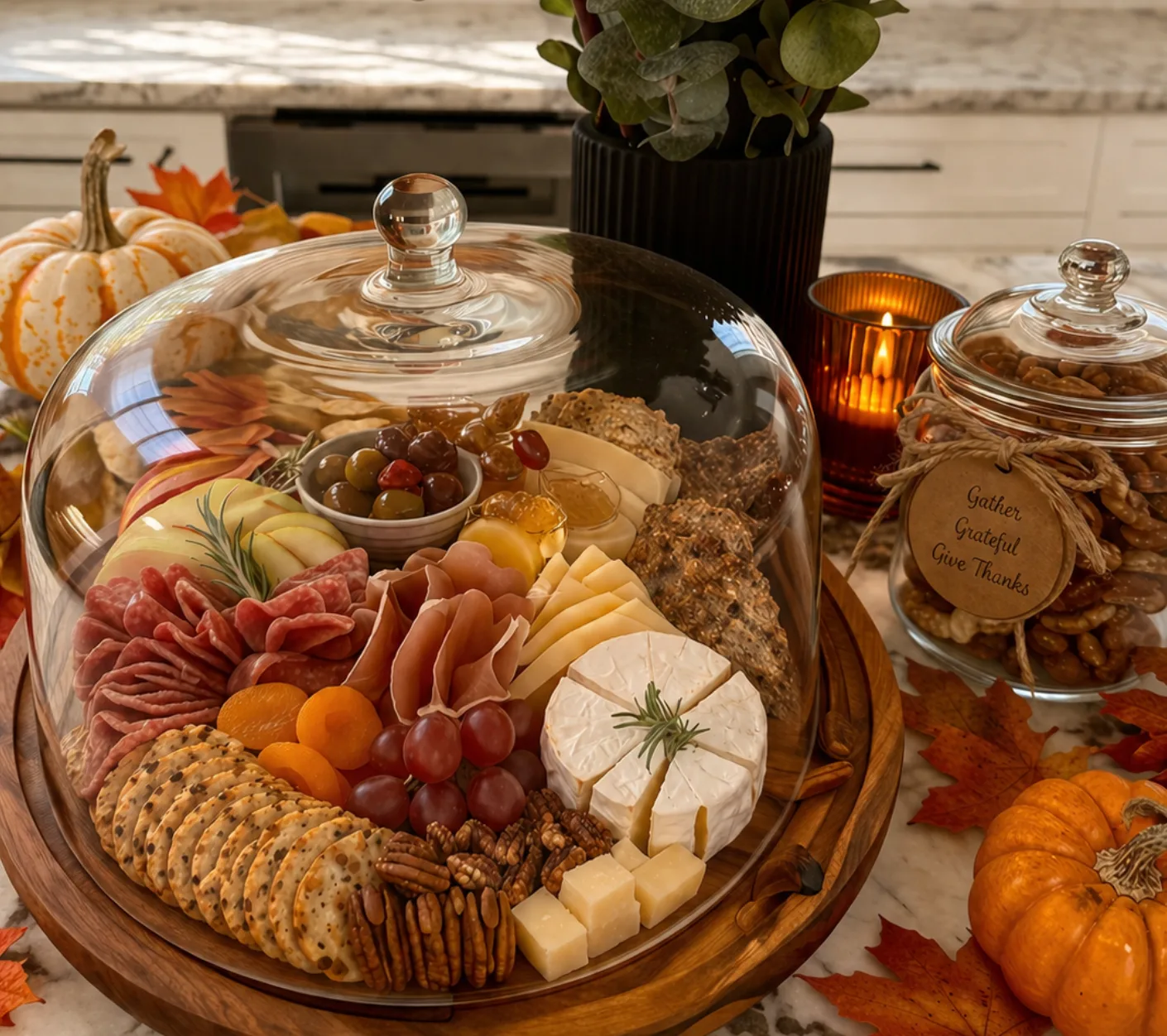
Fall is the easiest season to build for, because everything that reads as autumn also happens to taste good together. The board pictured above is a good example of the formula: a wheel of brie scored into wedges, aged white cheddar, salami roses and folded prosciutto for height, dried apricots and red grapes for color, candied pecans, apple slices, and seeded crackers around the edge. A sprig of rosemary and a small bowl of olives finish it without crowding anything.
Pears, figs, and aged gouda belong here too, and cinnamon-dusted nuts read as seasonal without tipping into anything that looks like a holiday decoration. A jar of candied pecans set beside the board doubles as a take-home favor for showers and smaller dinners, which is worth knowing if you want the spread to do two jobs at once.
Fall is also peak wedding season along the Front Range, so if this is the direction you're heading, timing matters as much as styling. We covered that in how far in advance to book a Denver wedding caterer.
The rest of the year
- Winter: citrus for color when nothing else is in season, plus dried fruit, dark chocolate, and richer cheeses that hold up to a heavier menu.
- Spring: fresh herbs, radishes, snap peas, goat cheese, and lighter cured meats, which pairs naturally with the shower and graduation season the Denver metro runs on from April through June.
- Late summer: Palisade peaches hit their stride from late July through September, and peach with prosciutto is the single easiest way to make a board feel like it belongs to that moment. Western Slope stone fruit generally, plums and apricots included, does the same job, and it carries you right up to the start of the fall boards above.
Local honey and a Colorado-made cheese are worth including year round. They cost about the same as the imported equivalent and give guests something specific to ask about, which is most of what a themed board is for.
Themed Boards for Different Occasions
Beyond the seasonal angle, the occasion itself can set the theme:
- Brunch board: soft cheeses, fresh berries, mini pastries, and a honey drizzle instead of heavier cured meats
- Game day board: bolder flavors, spicy salami, sharp cheddar, pretzels, and beer-friendly mustard
- Dessert board: chocolate, dried fruit, shortbread, and a soft cheese like mascarpone or brie
- Wedding cocktail hour board: a wider spread with more variety, since for a lot of guests this is the only food between the ceremony and dinner
- Corporate happy hour board: easy one-handed items, nothing that needs a knife, and clear labels so nobody has to ask
You can see how several of these come together on real events in our charcuterie board gallery, and the seasonal boards we have built for Colorado clients through the year.
What Size Board Do You Need?
Board size depends on guest count and whether charcuterie is the main food or an appetizer alongside a full meal. As a general guide for the physical footprint:
| Guest Count | Board Setup |
|---|---|
| 10-15 guests | One 16-18" board |
| 20-30 guests | One large board, or two medium boards placed apart |
| 40+ guests | Multiple boards spaced around the room, or a full grazing table |
That covers the footprint. For the actual quantity of food, meaning ounces and pounds of meat and cheese by headcount, we break the math down in detail in how much charcuterie you need per person.
Spacing multiple smaller boards around a venue instead of one giant centerpiece tends to reduce crowding and keeps lines from forming at a single spot, which is worth considering for larger Denver-area weddings and receptions. Once you are past about 40 guests, it is also worth asking whether a grazing table serves you better than boards at all, something we compared alongside the other formats in buffet vs plated vs grazing table.
Common Styling Mistakes to Avoid
- Everything flat: use small bowls, ramekins, or risers to add height and visual interest
- Too much of one color: alternate warm and cool tones so the board doesn't read as monochrome
- Cheese straight from the fridge: let cheese sit out for 20-30 minutes before serving so the flavor and texture aren't dulled by cold
- No labels: a few small cards identifying cheeses (especially anything unusual) help guests actually try them
- Overcrowding: leave a little negative space, a packed board looks busy rather than abundant
- Forgetting the altitude: at Front Range elevation, cut fruit and soft cheeses dry out faster than they do at sea level, so an outdoor board benefits from being built closer to serving time and refreshed partway through. A glass cloche over the board buys you real time here, and it doubles as a way to keep the display looking intentional while guests are still arriving
Bringing It Together
The best charcuterie boards aren't the ones with the most expensive ingredients, they're the ones with the most intentional variety: something creamy, something salty, something sweet, something crunchy, and enough color and height to make the whole thing feel a little bit like an event in itself. Picking a theme, whether that is a Colorado harvest board in September or a dessert board for a winter party, just gives all of those choices a reason to hang together.
If you're planning a wedding, shower, or corporate event in the Denver area and want a board built around your specific guest list and theme, reach out and let's talk through it. Our size and pricing guide is a good place to start if you're still working out what scale you need.
Frequently Asked Questions
What cheeses pair well together on a charcuterie board?
A good rule of thumb is to mix textures: a soft cheese like brie or goat cheese, a firm cheese like cheddar or gouda, and something bolder like blue cheese or aged manchego. That variety keeps the board interesting without any one flavor dominating.
How many types of meat and cheese should be on a charcuterie board?
Aim for 2-3 cheeses and 2-3 cured meats. That range gives enough variety to keep things interesting without overwhelming guests with too many choices.
How far in advance can I prep a charcuterie board?
Most components can be prepped one to two days ahead: cheeses portioned, nuts toasted, jams and spreads decanted into their bowls. Assemble the board itself the day of, ideally within a few hours of serving, and hold off on cut fruit and anything that browns until the last hour. Then let the finished board sit out for 20 to 30 minutes before guests arrive so the cheese comes up to temperature.
What should I put on a fall charcuterie board in Colorado?
Lean into what is actually in season: pears, figs, aged gouda, candied pecans, and cinnamon-dusted nuts. Local honey and a Colorado-made cheese are worth including year round, and through September, Palisade peaches with prosciutto still works beautifully on an early-fall board.
How do you keep a charcuterie board fresh at an outdoor event in Colorado?
Altitude and dry air work against you here more than heat does. Cut fruit and soft cheeses dry out noticeably faster along the Front Range than they do at sea level, so build the board closer to serving time than you would elsewhere, and plan to refresh it partway through a longer event. A glass cloche over the board buys real time, and keeping backup components in a cooler to swap in beats setting everything out at once.
Stay in the Loop
Seasonal Inspiration, Straight to Your Inbox
Occasional notes on entertaining, seasonal boards, and inspirations. No spam, unsubscribe anytime.