Quick Answer
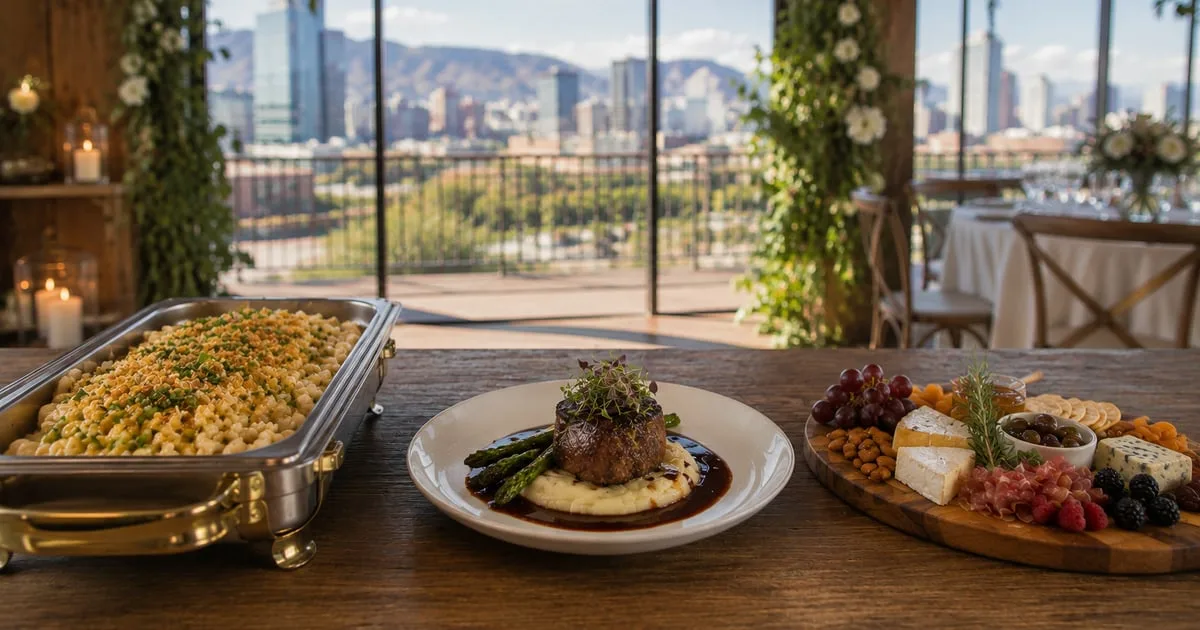
Plated dinners suit formal, seated receptions. Buffets work best for mid-to-large, relaxed weddings that want variety and flexibility. Grazing tables shine for cocktail-style events or as a stunning addition to cocktail hour, and many couples pair one with a buffet for the best of both.
Plated Service: Formal, Controlled, Elevated
Plated dinners are the most traditional option, and they're still a great fit for formal weddings where guests are seated for a longer program, like a ballroom reception at Cherokee Ranch or a black-tie evening at Willow Ridge Manor.
Pros:
- Feels elevated and intentional; every guest gets a designed plate
- Portion control makes food cost easier to predict
- Keeps the timeline tight and structured
Cons:
- Requires more serving staff, which raises labor cost
- Less flexibility for dietary preferences unless you offer plated choices in advance
- Guests are seated for most of the meal, which can slow the energy of the room
Best for: Couples with 100+ guests, a formal program with toasts and a first dance built around dinner, or venues that want a more traditional flow.
Buffet Service: Flexible, Generous, Crowd-Pleasing
Buffets remain the most popular choice for Colorado weddings, especially at venues like Denver Botanic Gardens or Hudson Gardens where the setting already feels relaxed and garden-forward. This is where most of our Denver couples land.
Pros:
- Guests choose their own portions and combinations, which is great for mixed dietary needs
- Often more cost-effective than plated for the same menu
- Encourages guests to get up, move around, and mingle
Cons:
- Needs a well-planned station layout to avoid long lines (this is where chafing dish capacity and multi-protein spacing really matter)
- Slightly less "designed" presentation than a plated course
- Requires enough serving stations to keep 50-150 guests moving efficiently
Best for: Mid-to-large weddings that want a relaxed, social reception without sacrificing variety.
Grazing Tables: Immersive, Social, Photo-Ready
A grazing table isn't just an appetizer spread. Done well, it can anchor cocktail hour, extend into dinner, or even replace a traditional buffet entirely for a more casual celebration. If you're weighing one as the main food rather than a starter, our guide to how much charcuterie you need per person walks through the portioning.
Pros:
- Built for mingling. Guests graze at their own pace throughout the event, which keeps energy high
- Visually stunning centerpiece that does double duty as décor (florists and planners love designing around them)
- Highly customizable by season. A fall table can feature roasted squash, warm spiced nuts, and apple-cider glazed bites; a summer table leans into stone fruit, burrata, and herb-forward boards
- Naturally accommodates dietary variety since guests build their own plate from a wide spread
- Often more budget-friendly per guest than a fully staffed plated dinner
Cons:
- Less formal. Not the right fit for a strictly traditional, seated program
- Needs a caterer who understands food safety timing for a table that sits out during the event
- Best paired with a light staffing plan to keep the table refreshed and beautiful all night
Best for: Cocktail-style receptions, rehearsal dinners, welcome parties, or as a stunning addition to cocktail hour before a buffet or plated dinner. Many of our couples actually combine a grazing table for cocktail hour with a buffet for dinner, giving guests the best of both.
At a Glance: How the Three Styles Compare
| Plated | Buffet | Grazing Table | |
|---|---|---|---|
| Formality | Highest | Medium | Lowest |
| Best guest count | 100+ | 50-150 | Any, especially cocktail-style |
| Budget | Higher (more staff) | Moderate | Often most budget-friendly per guest |
| Guest experience | Seated, structured | Mingling, self-served | Mingling, self-served, doubles as décor |
How to Decide: A Quick Checklist
A few questions to ask yourself before you book:
- Do you want guests seated most of the night, or mingling and moving?
- Is your reception more formal ballroom or relaxed garden setting?
- Do you want food to double as part of your décor?
- Are you working with a tighter budget that needs built-in flexibility?
There's no universally right answer here. It comes down to your guest count, your venue's flow, your budget, and the feeling you want walking into your reception.
And once you've settled on a format, it's worth knowing how far in advance to book a Denver wedding caterer, since the most popular dates go early.
So Which One Is Right for You?
If you're drawn to the idea of a reception that feels abundant, beautiful, and effortlessly social, a grazing table (alone or paired with a buffet) is where we specialize. It's often the detail guests remember and photograph most.
Not sure which format fits your wedding? We'd love to talk through your guest count, venue, and vision, and help you figure out the format that fits your day best.
Frequently Asked Questions
Can I combine a grazing table with a buffet at my wedding?
Yes, this is one of the most popular combinations we see. Many couples use a grazing table for cocktail hour, then move into a buffet for dinner, giving guests a beautiful, social start to the evening followed by a full meal.
Is a grazing table just appetizers, or can it replace a full meal?
It can do either. A grazing table works well as a cocktail hour anchor, but a well-planned one can also extend into dinner or replace a traditional buffet entirely for a more casual celebration.
Is a buffet more affordable than a plated dinner?
Generally, yes. A buffet is often more cost-effective than plated service for the same menu, since it typically requires less serving staff and gives guests control over their own portions.
Stay in the Loop
Seasonal Inspiration, Straight to Your Inbox
Occasional notes on entertaining, seasonal boards, and inspirations. No spam, unsubscribe anytime.