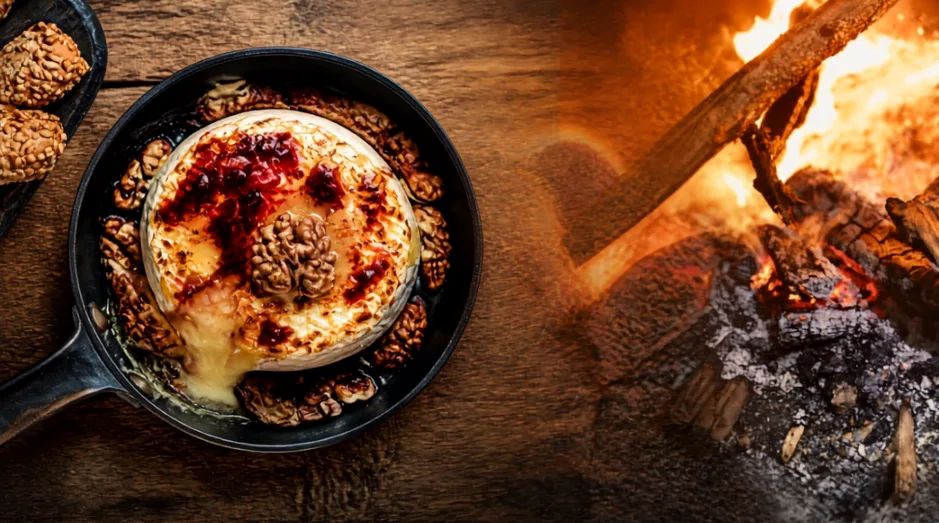
A fall camping charcuterie board works best when everything is shelf-stable: cured meats, aged cheeses, dried fruit, and toasted nuts that don't need a cooler. Add a skillet of campfire baked Brie and a pot of mulled wine, and you've got a full fireside spread with almost no real cooking involved.
There's a certain quiet that settles over a campsite once the sun drops and the fire finally catches. That first crackle, smoke curling up gold in the last light, someone pouring wine into a camp mug because the good glasses stayed home. A fire pit does most of the entertaining for you already. All you really need is food that doesn't ask much of you once you get there.
Fall camping charcuterie isn't about recreating a full board out in the woods. It's about picking a handful of things that travel well, don't need refrigeration, and taste even better with a little smoke and firelight around them.
What Belongs on a Fall Camping Charcuterie Board
The rule of thumb: if it needs to stay cold, leave it home unless you've packed a solid cooler. Everything else should earn its spot in your bag.
- Cured meats: dry salami, soppressata, or pepperoni sticks hold up for days without ice
- Hard, aged cheeses: gouda, aged cheddar, manchego, parmesan; skip anything soft unless it's headed straight for a cooler
- Dried fruit: apple rings, pears, figs, apricots
- Toasted or candied nuts: pecans and walnuts, ideally spiced with cinnamon and a little cayenne
- Honey or honeycomb for drizzling
- Sturdy crackers, packed in a hard container so they survive the drive
- Dark chocolate with sea salt, doubles as dessert
Not sure how much to pack? Our guide to how much charcuterie you need per person holds up just as well for a campsite spread as it does for a backyard party.
Pre-portion everything at home and wrap it before you leave. At camp, all you want to do is unwrap and arrange on a cutting board or a sheet of parchment.
Shelf-Stable vs. Cooler-Required, at a Glance
| Item Type | Shelf-Stable Pick | Needs a Cooler |
|---|---|---|
| Cheese | Aged cheddar, gouda, manchego, parmesan | Brie (fine same-day, safer chilled on longer trips) |
| Meat | Dry salami, soppressata, pepperoni sticks | Sliced deli meats, pâté |
| Fruit | Dried apple, pear, fig, apricot | Fresh berries, grapes |
| Sweet | Honey, dark chocolate | Anything cream-based |
The Star of the Fire: Campfire Baked Brie
If there's one thing worth building the evening around, it's this. A warm, melting wheel of Brie next to an open fire is one of the most satisfying fall entertaining moments there is, simple, a little dramatic, and it smells incredible.
What you'll need:
- A small cast iron skillet
- One wheel of Brie
- Honey, plus a few sprigs of fresh or dried rosemary or thyme
- Toasted pecans or walnuts (optional but excellent)
- Baguette or sturdy crackers, sliced
How to do it: Set your skillet on a grate over medium coals, not direct flame, so the cheese melts slowly instead of scorching on the bottom. Place the Brie in the skillet, drizzle with honey, and scatter your herbs and nuts on top. Let it sit five to ten minutes, checking by gently pressing the center; it's ready when it feels soft all the way through. Pull it off the fire, let it rest a minute, then serve straight from the skillet.
What to Pair With Mulled Wine
Mulled wine brings warm spice, cinnamon, clove, orange peel, and a little sweetness, so it wants food that's salty, smoky, or fatty to balance it out. That's exactly what a charcuterie board and campfire Brie already deliver.
- Aged, nutty cheeses (gouda, manchego) stand up well to the spice
- Cured meats add the salt mulled wine is missing on its own
- Toasted nuts and honey echo the warm spice instead of competing with it
- Go easy on anything too acidic or delicate, it tends to get lost next to mulled wine's bold flavor
Simple campfire mulled wine: a bottle of red wine, orange peel, a few cinnamon sticks, whole cloves, and a couple tablespoons of honey or sugar. Warm it in a pot over low coals, a gentle simmer, never a boil, for about ten minutes before serving.
A Packing List So Nothing Gets Left Behind
- Cast iron skillet (and a lid or foil to cover it while it melts)
- Cutting board or a roll of parchment for the board itself
- Small jars for pre-portioned nuts, dried fruit, and honey
- A grate that sits at a stable height over your coals
- A small cooler, if you're bringing Brie on a trip longer than a few hours
- Napkins, a knife for the cheese, and mugs for the wine
An Easy Order of Operations for the Evening
- Before dark: slice cheese, arrange dried fruit and nuts, set out crackers
- As the fire settles into coals: start the mulled wine warming on the edge of the fire
- Once you've got steady heat: set the Brie skillet on the grate
- While it melts: pour the wine, pull out the board, let people start snacking
- Last step: pull the Brie, drizzle with extra honey, and let the fire do the rest
It's the kind of spread that lets you wine down after a full day on the trail, low effort, high payoff, and it keeps everyone by the fire a little longer than they meant to stay. Hosting Thanksgiving once camping season wraps up? Our holiday charcuterie board ideas carry the same brie-and-honey spirit indoors. For more fall and seasonal inspiration, take a look through our seasonal board gallery.
If you love this fireside feel but would rather show up and enjoy it, Boards & Bites builds custom charcuterie and grazing boards for gatherings across the Denver metro area, camping trip or otherwise. Get in touch and let's talk about what you have in mind.
Frequently Asked Questions
Do I need a cooler for a fall camping charcuterie board?
Not for most of it. Cured meats, aged cheeses like gouda or cheddar, dried fruit, and nuts all hold up fine without refrigeration. The one item to watch is Brie: it's fine unrefrigerated for a same-day trip, but if you're traveling more than a few hours, pack a small cooler for it.
What's the best way to melt Brie over a campfire without burning it?
Set your cast iron skillet on a grate over medium coals rather than direct flame. That indirect heat lets the Brie melt slowly and evenly instead of scorching on the bottom, usually about five to ten minutes until it's soft all the way through.
What cheeses work best on a fall camping charcuterie board?
Hard, aged cheeses travel best: gouda, aged cheddar, manchego, and parmesan all hold up fine without ice. Save soft cheeses like Brie for the campfire skillet itself, or pack them in a cooler if they're headed onto the board as-is.
Stay in the Loop
Seasonal Inspiration, Straight to Your Inbox
Occasional notes on entertaining, seasonal boards, and inspirations. No spam, unsubscribe anytime.